
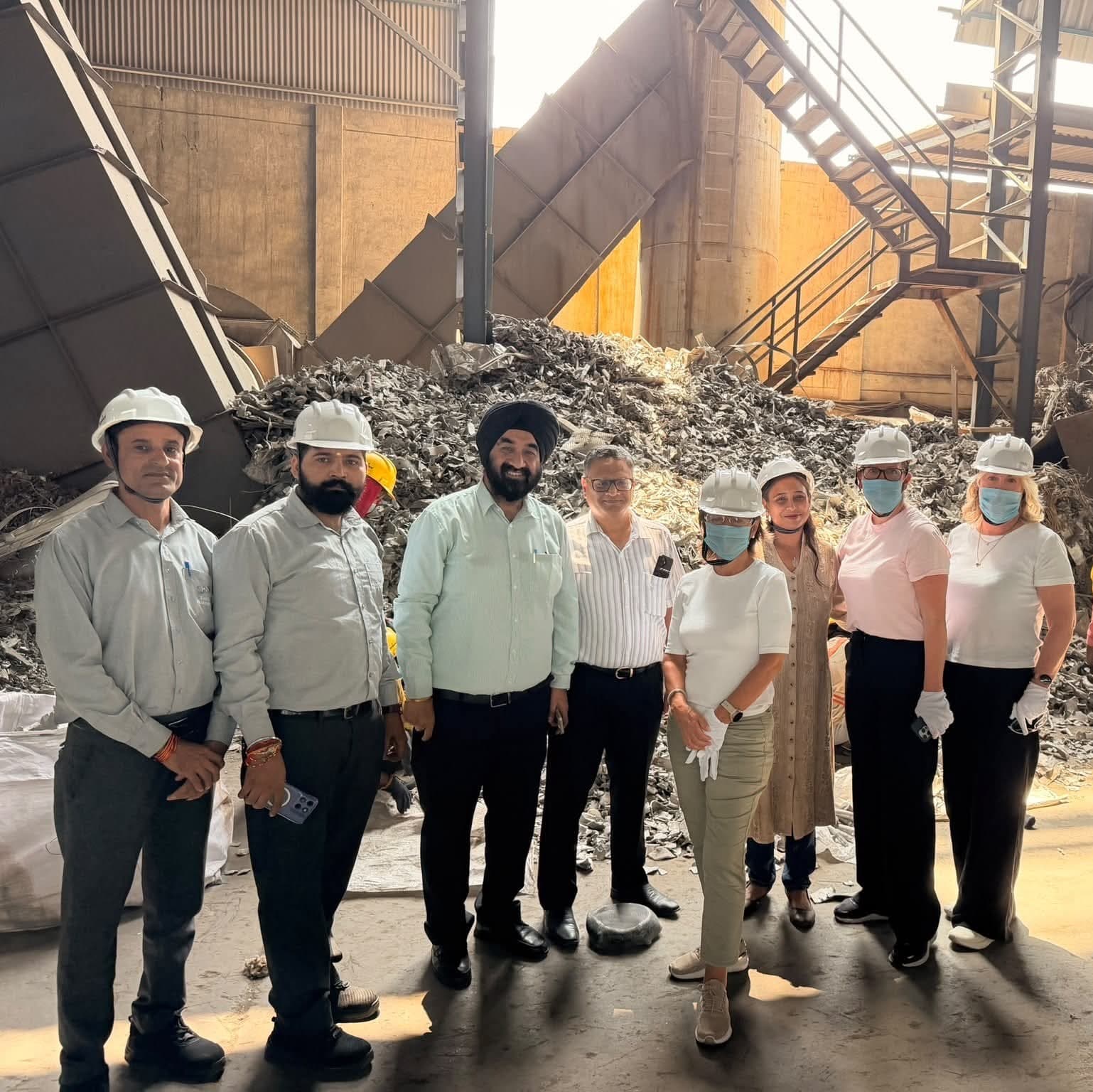
NG Nordic conducts on-site audits at facilities in India
NG Nordic has carried out on-site audits at six facilities across India this week, several located in remote areas, to check that sites receiving materials from NG Nordic meet its standards for human rights, working conditions and environmental practices.
The visited facilities include sites that receive metals and paper exported from NG Nordic's operations in Norway, Sweden and Denmark, as well as one facility that produces large waste sacks and bean bags for NG Nordic.
The visits are part of NG Nordic's broader programme of on-site audits across Europe and Asia. NG Nordic began carrying out site visits in Asia in 2014 and considers them a core part of ensuring responsible practices across its value chain. Physically visiting remote facilities at this level of detail is uncommon in the industry, but it's a standard NG Nordic wants to lead on and provides insights that cannot be gained from collection documentation alone.
-A report or a well-made website can only tell us so much. We need to see the operations with our own eyes to know what's actually happening on the ground, says Cecilie Skauge, Chief Sustainability Officer. This is what responsible business practice looks like in practice, not just on paper.
NG Nordic has previously stopped partnerships following site visits in high-risk countries, but much of the work is about helping facilities improve. In India, the visits point to a positive trend.
-We're there just as much to help them improve as we are to identify gaps. In India, we're seeing a genuine willingness to learn from European standards and that's exactly the kind of development we hope to see across our supply chain, says Lin Sellevaag Nicolaysen, Head of Group Compliance.
Recycling is a global industry that relies on well-functioning international markets. Europe alone does not have sufficient capacity, demand, or processing capabilities for all secondary raw materials generated within its borders. Every day, containers carrying a wide range of goods arrive in Europe from Asia. Rather than returning empty, many of these containers are used to transport recycable metals back to Asia, where there is significant demand for secondary raw materials. This allows existing return transport capacity to be utilized efficiently, avoiding additional transport movements and minimizing the environmental impact associated with logistics.